
Sardinia vs Corsica: Which Island for a Clothes-Free Mediterranean Summer?
Official clothes-free beaches and long walks on Sardinia, or resort-managed beaches and mountain scenery on Corsica.
Updated: October 2026

why this matters
making the choice
Sardinia and Corsica are neighbouring Mediterranean islands with warm seas and wild coastlines. Both have a growing choice of clothes-free beaches, and both are popular for a summer holiday, with beaches that suit long days in the sun.
They belong to different countries, though, and that changes how clothes-free travel works on each. Sardinia is Italian and has several officially designated beaches. Corsica belongs to France, where much of its clothes-free scene is organised around resorts.
This page compares beaches, driving, ferry access and places to stay, so you can pick the island that suits your clothes-free summer.
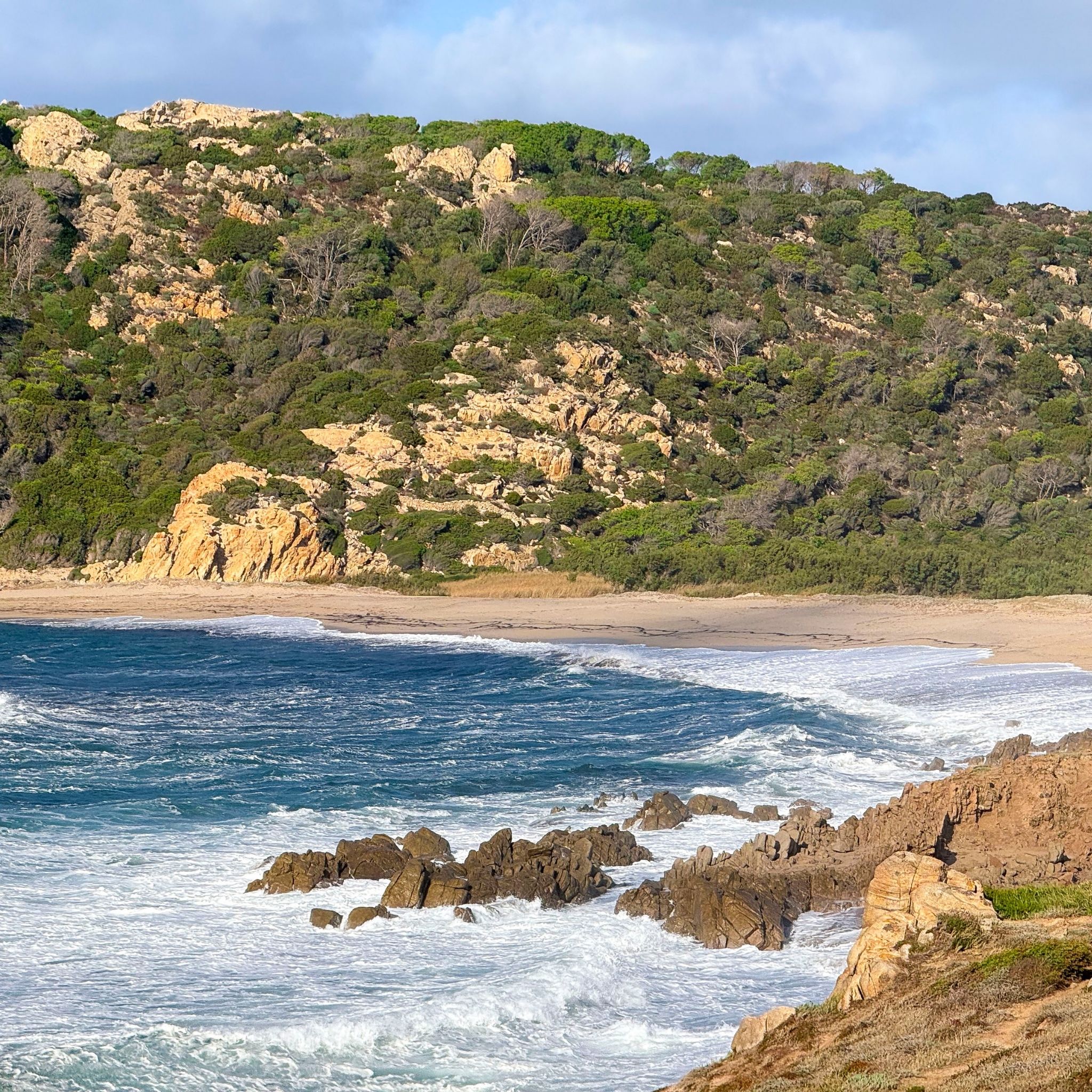
Sardinia
Sardinia is a large Italian island with 13 clothes-free beaches. Several are officially designated, including Piscinas, Feraxi and Baia delle Ninfe. Many beaches are reached on a walk of 10 to 30 minutes from the car. The season runs from May to October.

Corsica
Corsica is a mountainous French island with 13 clothes-free beaches. Several are resort-managed, including Linguizzetta on the east coast, Riva Bella and La Chiappa near Porto-Vecchio. The rest is rather informal. The season runs from May to October.
side by side
how they compare
Option ASardinia
Option BCorsica
Getting to the Island
Sardinia has three main airports: Olbia, Cagliari and Alghero. Direct summer flights run from London to Olbia.
Ferries cross from the Italian mainland and carry cars. Civitavecchia to Olbia takes roughly 10 to 13 hours, and routes also run from Genoa and Livorno. The crossing suits travellers who want to bring their own car and enjoy time at sea before the holiday begins.
Corsica has four airports: Bastia, Ajaccio, Figari and Calvi. Air Corsica flies from Bastia to Paris, Rome and Milan.
Ferries reach the island from France and Italy and carry cars. Marseille takes roughly 10 to 11 hours, Toulon roughly 8 to 9 hours, and Nice is shorter. Routes also run from Genoa and Livorno at about 4 hours. The crossing suits travellers who want to bring their own car and arrive by sea.
Nude Beach Character
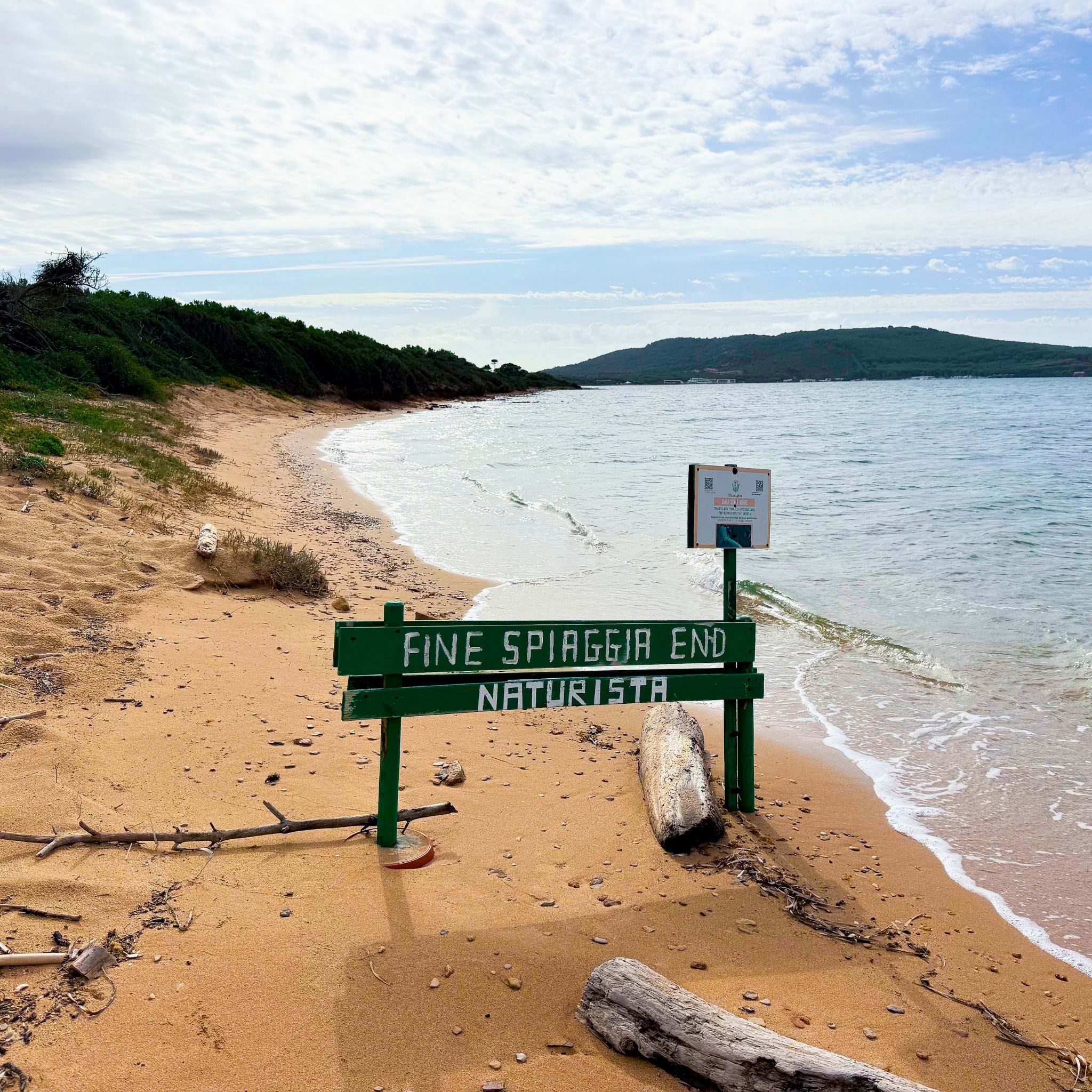
Several nude beaches on Sardinia are official: Torre Bianca di Porto Ferro, Piscinas, Baia delle Ninfe, Feraxi and a marked section at Sa Marina. Piscinas is an 800 m stretch at Arbus, and Feraxi runs for about 400 m.
Many beaches need a walk of 10 to 30 minutes from the car, so they feel secluded, with wide sand and room to spread out.
The most organised nude beaches on Corsica are resort-managed: a 5 km clothes-free stretch at Linguizzetta on the east coast, the beach at Riva Bella with its 79 ha family resort, and La Chiappa near Porto-Vecchio.
The other beaches are informal, with nudity tolerated but no official status. They are set along a rugged coastline, so the scenery changes from one beach to the next.
Clothes-Free Rules and Culture
On Sardinia’s official beaches nudity is the norm. Torre Bianca di Porto Ferro, Piscinas, Baia delle Ninfe and Feraxi are designated, and a section of Sa Marina is marked for clothes-free use.
Elsewhere, clothes-free swimming is informal, so look at what other swimmers are doing before you undress. The designated beaches are the surest place to start if you want clear signs and a settled atmosphere.
In France, nudity is permitted only in designated areas. On Corsica, resort-managed beaches such as Linguizzetta, Riva Bella and La Chiappa provide that clear framework, and nudity is the norm there.
At the other beaches nudity is tolerated rather than officially allowed. Choose quieter spots, read the mood of the beach and follow what others do. The resort-managed beaches are the surest place to start if you want clear rules and a settled atmosphere.
Roads and Beach Access
A car is mandatory on Sardinia, because the clothes-free beaches are spread across a large island. Many beaches need a walk of 10 to 30 minutes from where you park, so bring sturdy footwear, water and sun protection.
The official beaches are the easiest to find, because they are named and mapped. Allow generous time between beaches, and plan to base yourself in one region at a time rather than crossing the island every day.
A car is essential on Corsica, where winding mountain roads link the coast and the beaches. Plan extra time for each leg, because the road follows the shape of the island.
Wind is a regular feature on Corsican beaches, so check the forecast, bring a windbreak and weigh your towel down. The resort-managed beaches at Linguizzetta, Riva Bella and La Chiappa are the easiest to reach and have the most services.
Island Size and Layout
Sardinia covers about 24,100 square kilometres, with its main hubs far apart. Cagliari in the south and Olbia in the north-east are 193 km apart.
The clothes-free beaches are spread around the island, from the west coast at Arbus to the north-west at Porto Ferro. This layout suits a road trip with several bases, where each stay explores a different stretch of coast and a different style of beach.
Corsica covers about 8,722 square kilometres, and mountains run through its middle. That shapes the trip, because the coast is the main route and the clothes-free beaches and resorts gather on the east coast and in the south-east near Porto-Vecchio.
A week fits a single region well, for example a stay on the east coast near Linguizzetta with day trips to nearby beaches and a few lazy days at the resort.
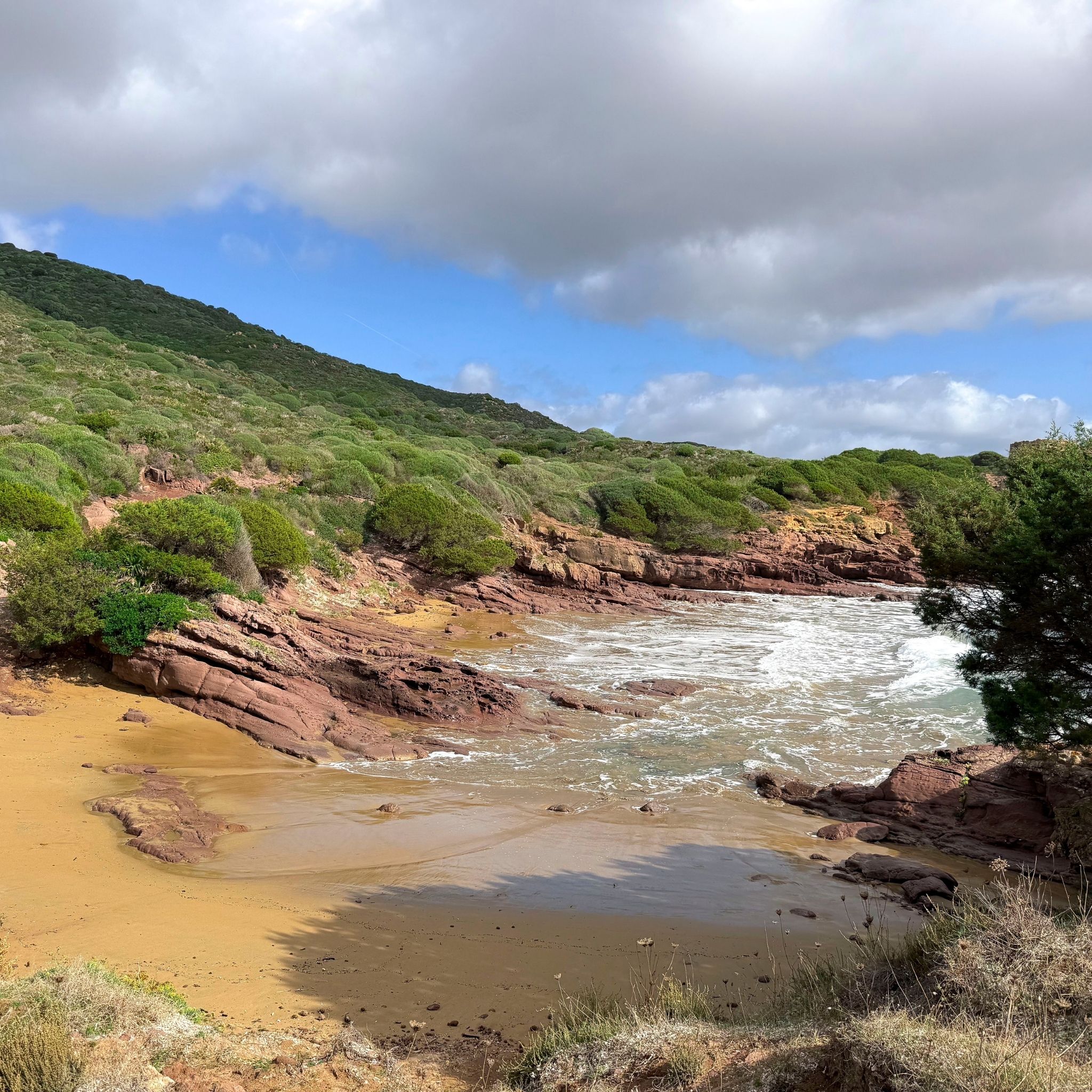
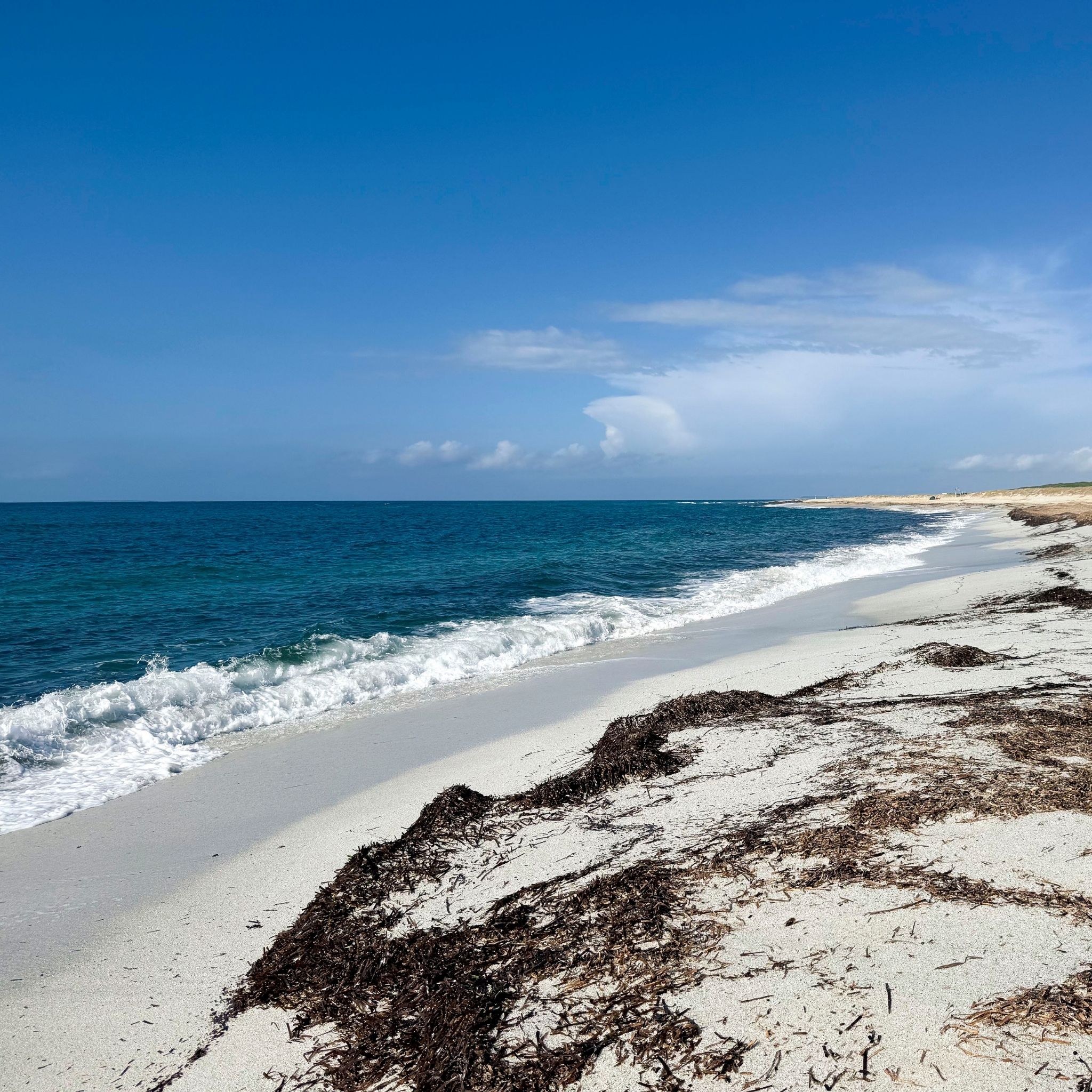
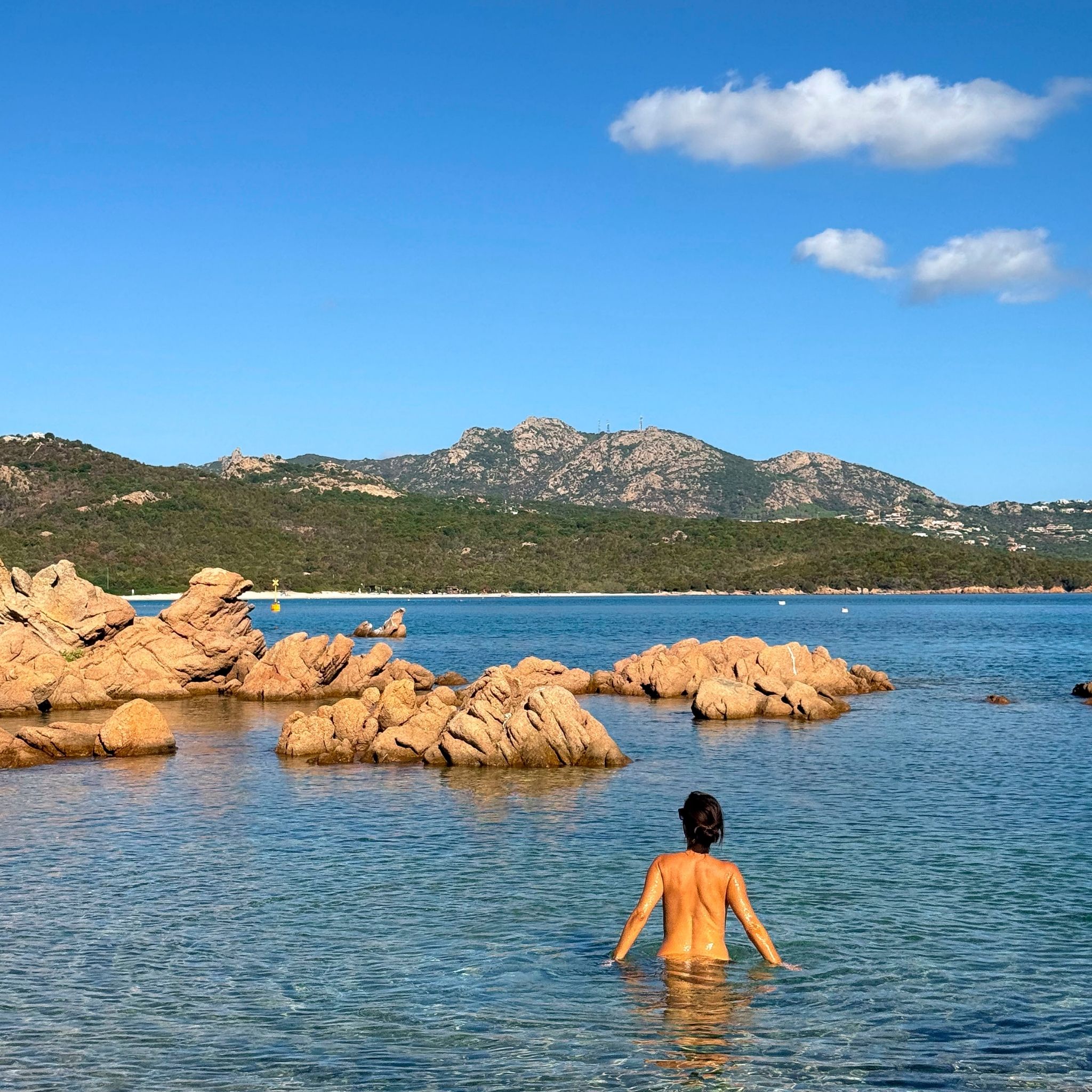
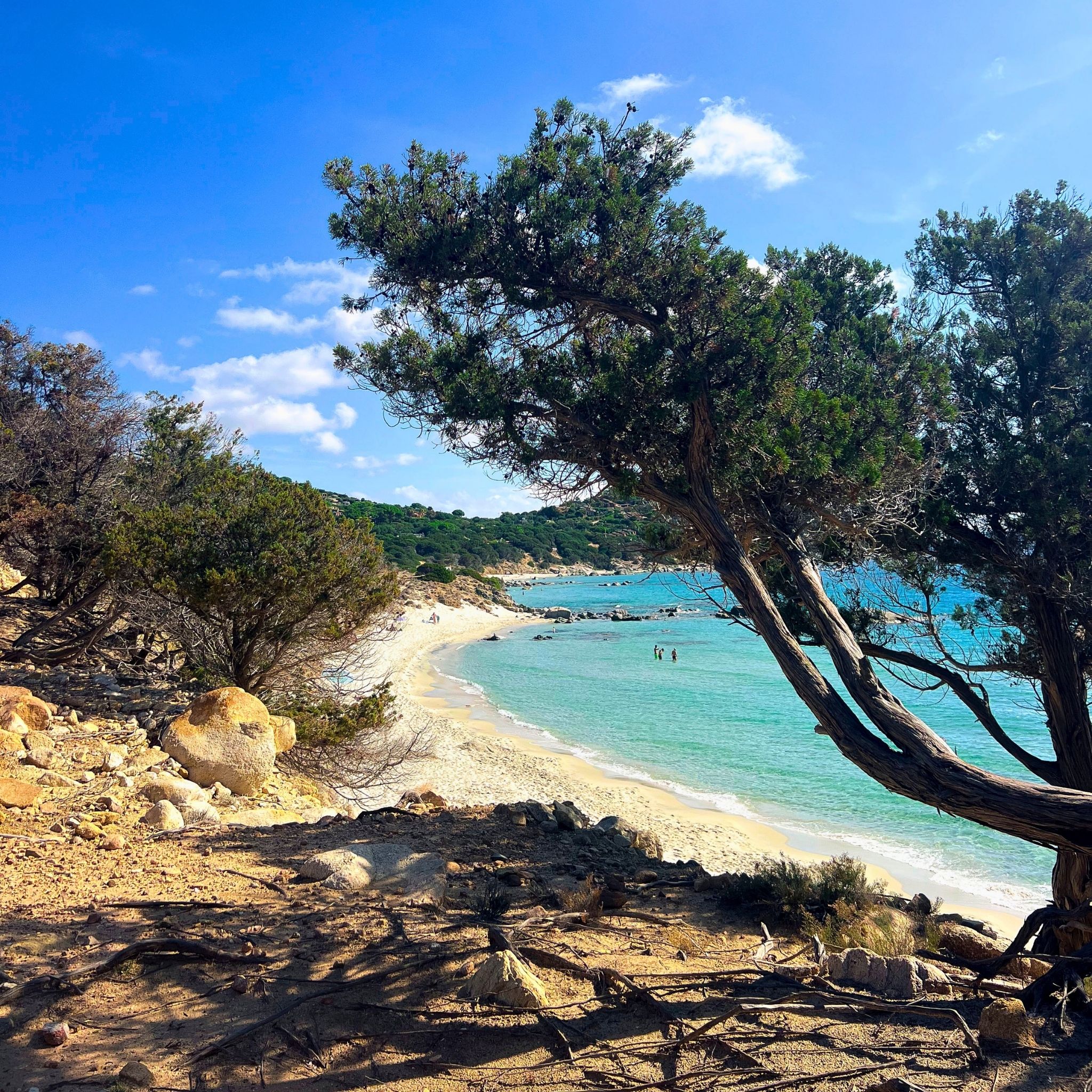
Sardinia in pictures
←
→
swipe or use arrows
Corsica in pictures
←


→
swipe or use arrows
pick your favourite
chosing the best for you
Choose Sardinia if...
- you want officially designated beaches such as Piscinas and Feraxi
- you want a large island for a road trip with several bases
Choose Corsica if...
- you want a resort-managed beach with a family resort close by
- you like having both resort stays and informal beaches to choose from
practical
what to know
getting there
Both islands are reached by air or by sea, and both are easiest with a car.
Sardinia has airports at Olbia, Cagliari and Alghero, with direct summer flights from London to Olbia. Corsica has airports at Bastia, Ajaccio, Figari and Calvi, and Air Corsica links Bastia with Paris, Rome and Milan.
Ferries carry cars to both islands. Routes to Sardinia run from Civitavecchia, Genoa and Livorno. Routes to Corsica run from Marseille, Toulon, Nice, Genoa and Livorno.
The two islands are also linked by a short ferry between Bonifacio on Corsica and Santa Teresa Gallura on Sardinia. The crossing takes 50 to 60 minutes, which makes a trip to both islands realistic.
Where to Stay
Corsica has clothes-free resorts to stay. Riva Bella and Bagheera at Linguizzetta on the east coast. La Chiappa is a clothes-free resort near Porto-Vecchio, and U Furu is a small holiday village in the same area.
Sardinia’s clothes-free offer centres on its beaches, so plan a base near the beaches that appeal to you.
Book early for July and August on either island, and check opening dates for resorts if you travel outside the main summer months.
when to go
Both islands run their clothes-free season from May to October. In July and August the sea reaches about 25 to 26 degrees Celsius around Sardinia and about 24 to 25 degrees around Corsica.
The shoulder months of April, May and October are quieter. On Corsica, some resorts close in these months, so check opening dates before you travel.
The mistral wind can blow on both islands. It can cool the air and make the sea choppy, so check the forecast and choose a sheltered beach on windy days. Spring and early autumn are good for walks to remote beaches.
what to know
Bring water, food, sun protection and a towel, because many beaches have no facilities. Sturdy footwear helps on the walks to remote beaches.
Distances are longer than the map suggests. Cagliari to Olbia is 193 km and takes more than three hours by road. During the summer months there are regular traffic jams, so avoid packing too much into one day.
Check local rules and signs at each beach. Beaches without official status rely on local custom.
leave prepared
all the essentials
Find flightsBook Find flights
Find ferriesBook Find ferries
Rent a carBook Rent a car
Book a tourBook Book a tour


