The Nude Beaches of Huelva, Spain
snapshot
season
LEGAL STATUS
GETTING THERE
Vibe
where we are
REGIONAL orientation
Huelva is Spain’s most south-western province, bordering Portugal along the Atlantic coast known as the Costa de la Luz. The provincial capital, also called Huelva, is located between the Piedras and Guadalquivir river systems, with towns like El Rompido, Punta Umbría and Mazagón spread along the shore.
Much of the eastern coastline, including Playa de Rompeculos, lies inside Doñana National Park, a UNESCO World Heritage wetland reserve of marshes, dunes and pine forest that is also one of Europe’s most important sites for migratory birds. Away from the beaches, the region is known for its fishing ports, seafood and the Marismas del Odiel wetlands near Huelva city, giving visitors plenty to combine with a day at the coast.
the nude beaches
ONE BY ONE

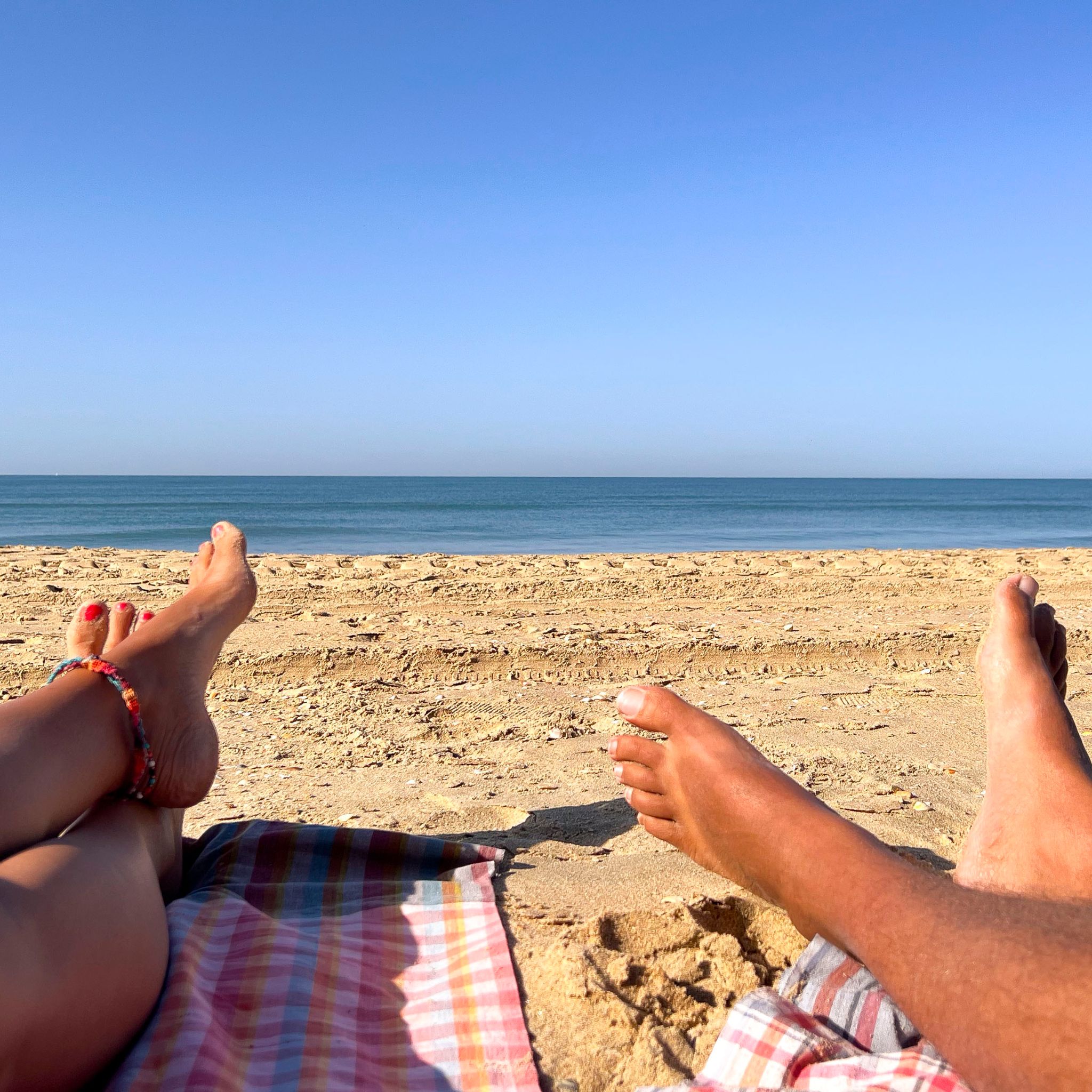
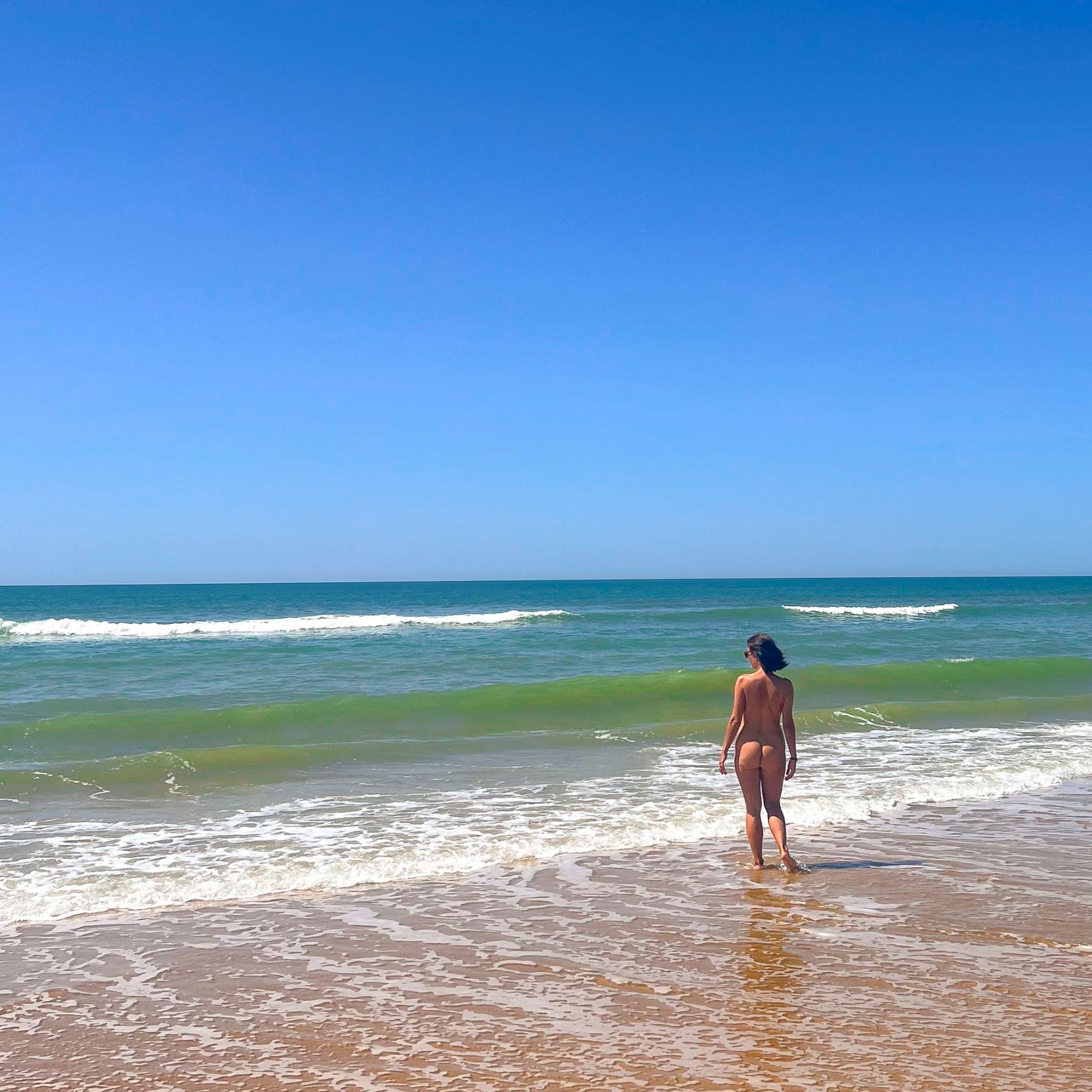
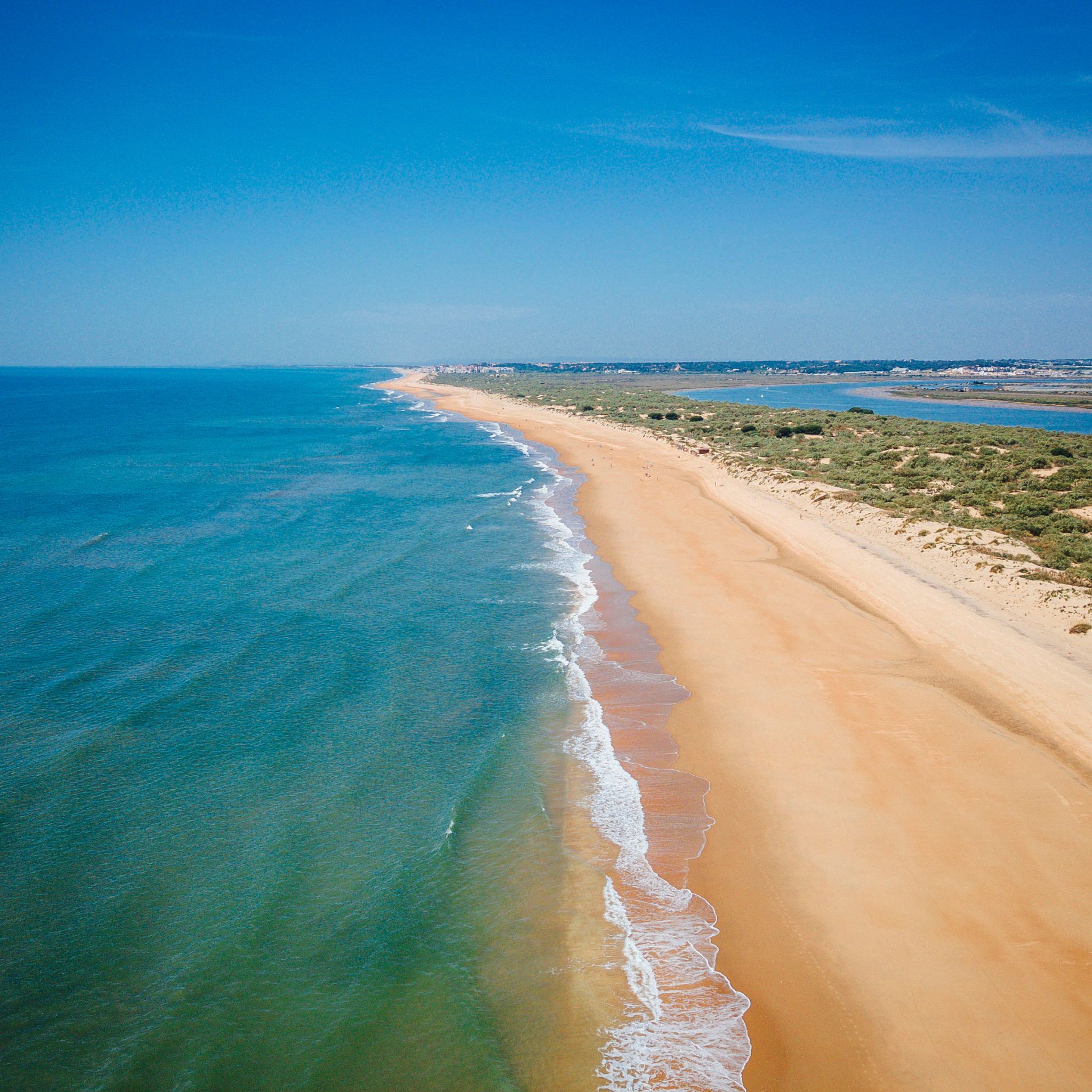
Nueva Umbria beach lies on a long sandbar cut off from the mainland by the Piedras river, reachable only by boat. Golden sand runs along the natural monument of La Flecha, backed by dune vegetation and framed by the river on one side and the open Atlantic on the other. A small beach bar and a cluster of sunbeds mark the arrival point, but the beach stretches on well beyond them.

Playa de los Enebrales runs along the coast just west of Punta Umbria, backed by pine woodland and dune scrub within a protected natural site. Away from the stretch near the campground, the beach is quiet enough that fishermen and the occasional walker are about the only company you’ll get. There is no development along most of the shore, just open sand and sea.

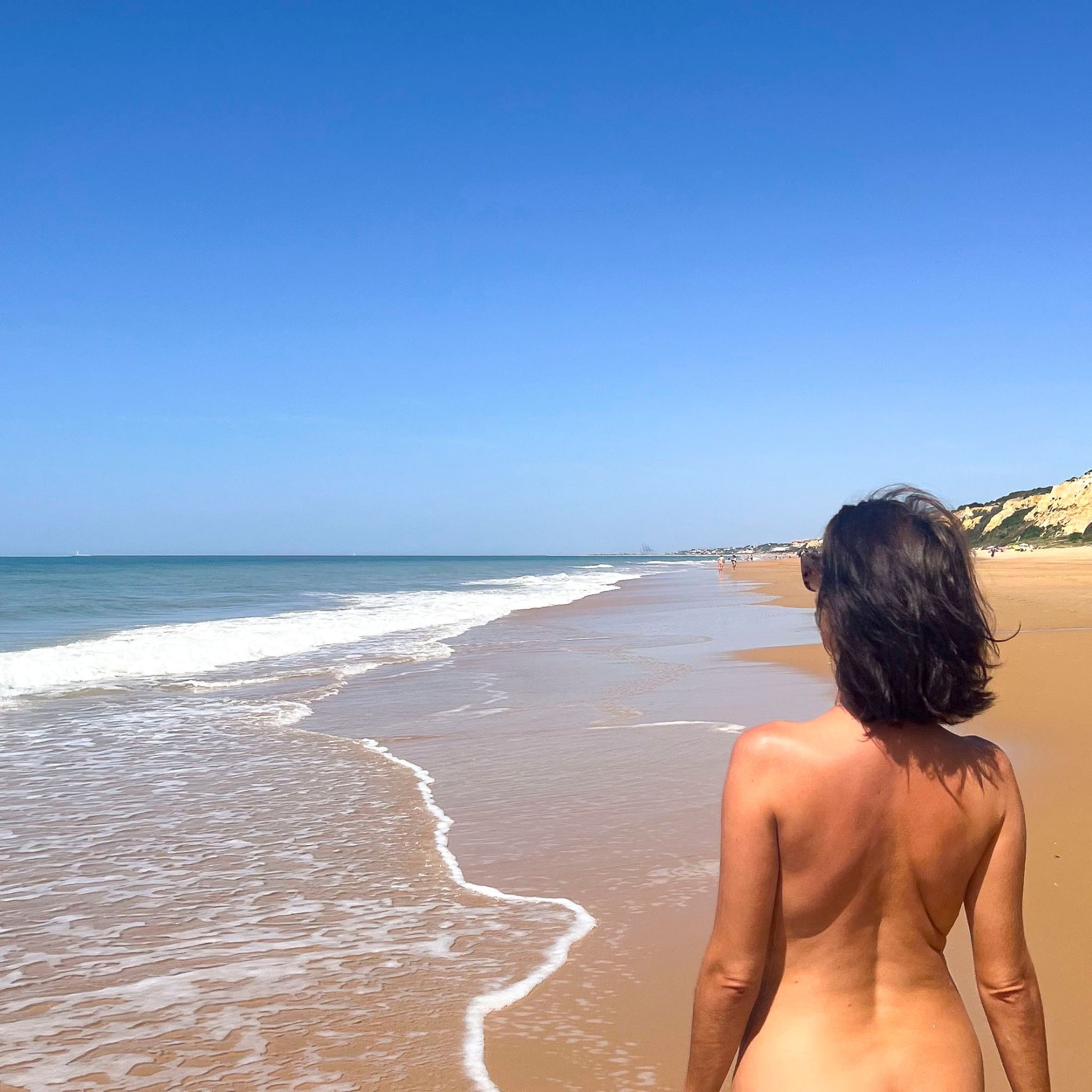
Playa de Rompeculos forms part of a nearly unbroken 28 kilometre stretch of coastline inside Doñana National Park, among the longest beaches in Spain. High cliffs rise behind the sand, and the scale of the place is hard to match anywhere else in this guide. A sign near the car park warns that clothes-free is banned, but that restriction applies to only a handful of Spanish towns, and it cannot apply here. Just walk a bit away from the entrance before taking off your clothes.
WHO THIS IS FOR
WHO SHOULD GO & who should not
Great for
- ✓ Anyone curious how relaxed a country's clothes-free laws can really be
- ✓ Couples or groups who prefer walking away from parking areas over signed beaches
- ✓ Wildlife-minded travellers keen to pair a beach day with Doñana's dunes and pines
not ideal if
- ✕ You want a beach with easy, direct car access at every stop
- ✕ You'd rather not carry your own food, drinks and shade for the day
practical
GETTING THERE & what to know
getting there
The nearest major airport is Seville, about 90km and roughly an hour’s drive from Huelva city. From there, a car is the easiest way to reach all three beaches, since none are served by public transport that reaches the sand itself. Flecha de Nueva Umbria adds an extra step: park at El Rompido, then take a 20 minute ferry crossing rather than driving directly to the beach.
best time to go
legal status
what to bring
WHERE TO STAY NEARBY
virtual visit
SEE FOR yourself
Sometimes a two-minute watch tells you more than a page of text. Our video shows you what the beaches in this overview actually look like.
FAQ
most asked questions
Is nudity mandatory, or can I keep some clothes on?
Nudity isn't required at any of these beaches. Spanish law doesn't ban public nudity, so clothed and unclothed visitors share the same sand, particularly near ferry drop-off points, car parks and beach bars.
Are the nude beaches of Huelva good for first-timers?
Yes. Spain's relaxed legal position makes Huelva a comfortable place to start. Flecha de Nueva Umbria is officially recognised as a clothes-free beach, which gives first-timers a clear, low-pressure place to begin before trying the more informal stretches at Los Enebrales or Rompeculos.
Are these beaches family-friendly?
None of the three beaches are set up specifically for families, and none have lifeguards or facilities beyond a single beach bar. Playa de los Enebrales, with its calm, undeveloped shoreline and free roadside parking, is the easiest of the three to reach with children in tow.
Do I need a car to visit?
Yes, a car makes this trip far easier. None of the three beaches are reachable by public transport that reaches the coast itself, and Flecha de Nueva Umbria also requires parking near El Rompido before boarding the ferry.
What time of year are the beaches at their best?
The swimming season runs roughly from May to October. Summer weekends bring the busiest car parks and ferry queues, so spring and autumn visits, or early mornings in peak season, tend to be quieter.
Are there toilets or food available at the beaches?
Facilities are limited. Nueva Umbria has one small beach bar near the ferry drop-off, and beach bars exist along the coast at Los Enebrales and near the Rompeculos car park, but none serve the clothes-free sections of sand directly. Bring your own food, drinks and shade.